
The March on Washington: History Repeats
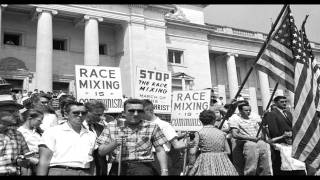
The (ironic) imaging of black and white: marches, prayers, and stands. Birmingham, Alabama, the peak place of segregation, the youth recognized they were the future. No matter the suffering, the dogs, the beatings, the hoses.[A. Philip Randolph] understood mass action was needed. He sat down with the president, organized two further marches in the 50s, and brought Rusting with him (a gay, young communist, African American, everything America despised at the time).With the winning of JFk as president, brought hope with his speech of democratic views of freedom, but after years of hesitation it wasn’t enough. “We must remind him, we elected him!” Mr. King proclaimed. MLK hoped for JFK could bring about change and had the desire to do so, just lacked the need to see it through.With the refusal of admitting two African American students into the University of Alabama, and mass mounts of arrest from demonstrations showing steady numbers, Kennedy recognized he needed to make change. In a day, he puts forward a speech and a bill recognizing African Americans needed freedom.As the March on Washington moved forward, Kennedy feared a rise of violence that may follow. The
Events that Took Place:
FBI pulled Kennedy aside and warned that they needed to rid of two of the biggest (Jack O’Dell) and (Stanley Levison) for being communist. MLK had become a close friend of kings, by now. They began wiretapping Levison, and found no evidence he actually supported communism. JFk tells MLK rid of these two, and then there will be presidential support. MLK eventually removes O’Dell, but the scare of communism brings delays for the march.For weeks, workers spent 6days a week, 18hours a day, putting together the March. No fax, no cell phone, no email. People were sent out to issue programs into cities by collecting groups, informing them about what could happen, raising funds for those who couldn’t afford to go to Washington, and getting people to join the movement. Marlon Brando, Sammy Davis, Steve McQueen, and various celebrities came forward to help with the movement.The assumption of white people? Violence, riots, chaos. The anticipation in the city of Washington was measurable. It was in the air; you could feel it.
August 26th, 1963. People begin the ride out. Buses, packed and covered in signs.
August 27th, 1963. Celebrities suspend movie work, and take leave on jets. The first arrivals begin to pour in. The streets were covered. Signs are raised and Joan Baez takes to the stage singing “We Shall Overcome” Buses arrived in the hundreds. Thousands moved in.
August 28th, 1963. The crowds are in full effect. Not everything was going smoothly, as John Lewis’s proposed speech brought about controversy. They worked up to the last minute to make alterations to the speech. One sign hits hard: “We march for freedom in 1963 that was promised in 1863.”
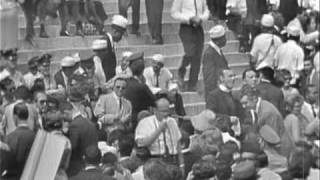
August 29th, 1963. Over 200,000 people took to streets for the march. Powerful business and national organization took to the stages. The mix of different colored individuals sharing song, water, handholding, and air brought about unity that had never been seen before.
John Lewis’s speech, although altered, had a big effect. People roared in applause as his speech pointed out cultural differences rarely though of before, such as saying black people instead of colored people/negros.
Then came the moment in history shown and known around the world of Martin Luther King’s speech; an event many had never been able to experience “no we are not satisfied and we will not be satisfied till justice rolls like water-”






Comments